
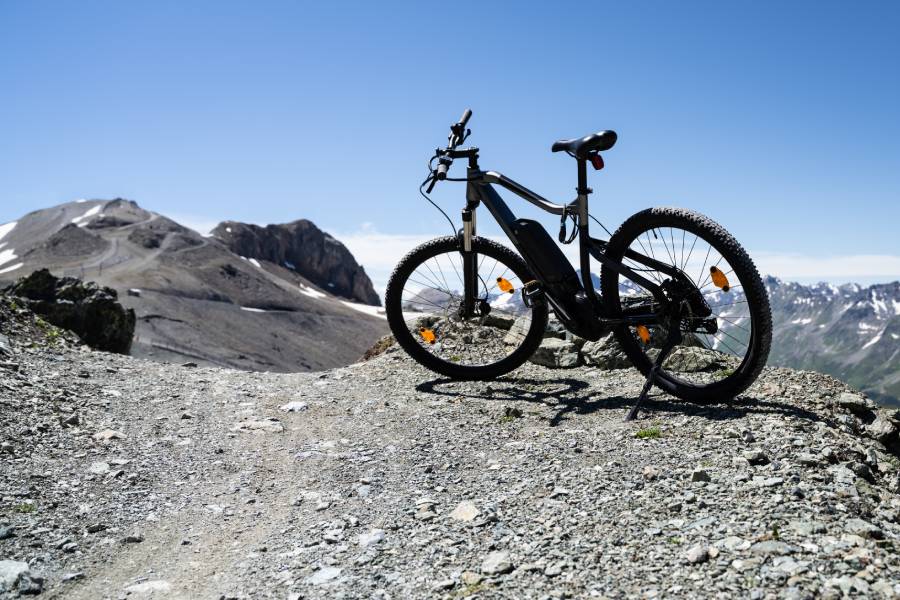
Smoother performance for varied terrain and natural pedaling feel is usually offered by mid-drive e-bikes, while smoother operation on flat routes with less maintenance is provided by hub drives. Your riding style determines the choice; hills are where mid-drives excel and they feel more like traditional bikes, whereas quiet, consistent power for commuting is offered by hub drives.
Fast Facts:
- Hub drive motors are mounted in the front or rear wheel
- Mid-drive motors sit near the bike’s bottom bracket and pedals
- 73% of commuter e-bikes use hub drive systems for reliability
- Mid-drive e-bikes typically cost $200-800 more than hub drive models
- Hub drives require less maintenance over 2-3 years of regular use
Understanding Motor Placement Basics
Everything about how your e-bike performs is shaped by motor placement, I suppose. Hub drives hide inside the wheel; either front or rear placement is used. Mid-drives mount between your pedals where a traditional bike’s bottom bracket sits. Weight distribution, handling, and how power gets delivered to the road are affected by this positioning. From what we’ve seen, the difference is noticed by most riders within their first few miles.
Power Delivery Differences
Your bike is pushed or pulled forward independently of your pedaling by hub motors. You can actually coast while all the work is done by the motor. Mid-drive systems work through your bike’s chain and gears; your pedaling effort is multiplied rather than replaced. A Cambridge commuter recently told us her mid-drive feels like having “super legs” rather than being pushed along. The sensation varies quite a bit between systems, in a way.
Terrain Performance Comparison
Hub drives are favored by flat roads for their consistent, smooth power delivery. Hills tell a different story. Lower gears can be shifted into by mid-drives and more torque applied when climbing. Steady power output is maintained by hub drives regardless of terrain, which works fine for gentle slopes but struggles on steeper grades. Plus, handling is affected by the weight distribution. Weight is kept centered by mid-drives, while weight is added to one wheel by hub drives.
Maintenance and Reliability Factors
Generally sealed units that resist weather and debris are what hub drives are. Service beyond basic cleaning is rarely needed by them. Mid-drives connect to your bike’s drivetrain, so faster chain wear happens. Chains and cassettes will probably be replaced more often with a mid-drive system. But mid-drives are usually easier to remove for service since they’re not built into the wheel. That trade-off matters depending on how much maintenance you want to handle. Interesting how that works.
Cost and Value Considerations
Less upfront cost is typically associated with hub drive e-bikes. The motor technology is simpler; lower manufacturing costs result. Complexity and expense are added by mid-drive systems, but better performance on varied terrain is often provided by them. A quality hub drive e-bike in Cambridge might run $1,200-2,500, while comparable mid-drive models start around $2,000-3,500. The equation is shifted somewhat by long-term costs, since more frequent drivetrain maintenance may be needed by mid-drives.
Choosing Based on Your Riding Style
Hub drives are often preferred by daily commuters on mostly flat routes for their reliability and smooth performance. Mid-drives are leaned toward by weekend explorers and fitness riders for the natural pedaling feel and climbing ability. Hub drives are frequently chosen by students around Cambridge because they’re simpler and more affordable, to be fair. Your perfect e-bike awaits once the motor type is matched to your actual riding needs. Visit our website to explore both options and find what works best for your lifestyle.
Mini-FAQ:
Q: Which motor type feels more natural when pedaling? A more natural feeling, like riding a regular bike, is provided by mid-drive motors. The motor is positioned where power is naturally created by your legs. Hub drives can feel slightly disconnected since the wheel is where the motor pushes from. That difference becomes noticeable on longer rides.
Q: Do hub drives really require less maintenance? Look, fewer moving parts are exposed to dirt and weather with hub drives. They’re sealed units; attention is rarely needed. Mid-drives connect to your bike’s chain and gears, so more wear is experienced by them. Regular chain maintenance becomes more important.
Q: Which system climbs hills better? Fair point to ask. Your bike’s existing gears are used by mid-drive motors, so torque can be multiplied for steep climbs. Fixed power is delivered by hub drives regardless of what gear you’re in. The difference shows up quickly on anything steeper than a gentle incline.
Q: Are hub drives actually quieter? Nearly silent operation is provided by hub motors since they’re enclosed in the wheel. Some noise is made by mid-drives because the bike’s drivetrain is worked through. That still surprises people.