
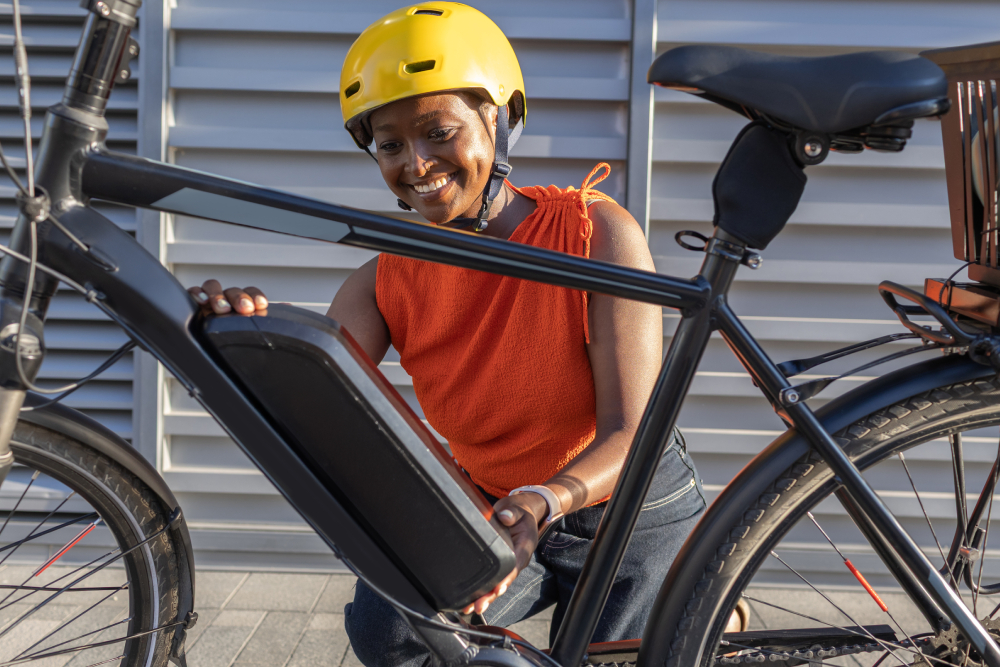
Height and riding style usually determine e-bike sizing, with a frame 1-2 inches smaller than their regular bike being needed by most riders. Your inseam should be measured and manufacturer charts checked; comfort and reach matter more than strict measurements, however. A test ride at a local shop should be considered to ensure the perfect fit.
Fast Facts:
- Most e-bike frames run 1-2 inches larger than traditional bikes due to motor placement
- Inseam measurement is more accurate than height for frame sizing
- 68% of first-time e-bike buyers choose the wrong size initially
- Step-through frames offer easier mounting but may limit size options
- Professional fitting can improve comfort by up to 40% on longer rides
Understanding E-Bike Frame Geometry
Different construction is used for e-bike frames than traditional bicycles. How the bike balances and handles is affected by motor and battery placement. Frames are designed around these components by most manufacturers; slightly different proportions often result from this approach.
This was discovered by a commuter in Cambridge when different models were test ridden recently. Her usual 54cm frame was expected to work perfectly. The e-bike felt awkward and stretched out, though. The bottom bracket had been pushed forward by the motor housing, which changed her natural riding position.
Height vs. Inseam: Which Matters More?
Better sizing guidance is usually provided by your inseam measurement than overall height. Against a wall with a book between your legs, stand pressed up firmly. From the floor to the top of the book, measure. The standover clearance you’ll need is given by this measurement.
This measurement is focused on by most sizing charts. Good reason exists for this approach. Between people of the same height, leg length varies significantly. A 30-inch inseam or a 34-inch inseam might be had by a 5’8″ person. In frame requirements, that’s a huge difference.
Motor Placement Changes Everything
At the pedals, mid-drive motors are positioned; frame geometry is affected by this. In the wheels, hub motors sit but weight is added that changes balance. How the bike feels when you’re riding is influenced by both systems.
Compared to regular bikes, the weight distribution gets shifted. Slightly, your center of gravity moves, especially with rear hub motors. A more upright position on e-bikes is preferred by many riders for this reason. More stable and controlled, it just feels.
Step-Through vs. Traditional Frames
Easier mounting and dismounting is offered by step-through designs. Your size options are often limited by them, though. The frame triangle is changed by the low top tube; stiffness and handling can be affected by this.
More size variety is provided by traditional diamond frames. Typically stiffer, they’re also preferred by some riders for efficiency. Mobility needs versus performance preferences often determine the choice. When sized correctly, comfortable and reliable rides can be provided by both styles.
Test Riding: The Reality Check
Only part of the story is told by numbers on a chart. More than perfect measurements, how the bike feels under you matters. Different geometries are had by different brands, even in the same size category.
Three different 56cm e-bikes were tried by a local outdoor enthusiast last month. Perfect was how one felt, too stretched out was another, and cramped was the third. On paper, same size; completely different experiences were had. All the difference was made by the motor placement and frame angles. Funny thing, really.
Making Adjustments After Purchase
Your fit can be fine-tuned by seat height and handlebar position. Less adjustment range is offered by e-bikes than traditional bikes, however. How much you can change things is limited by the motor and battery.
With reach issues, stem length and angle can help. Weight distribution and comfort are affected by seat position. Minor tweaks are these, though, not major corrections. Frustration later is saved by getting close to the right size initially. Your perfect e-bike awaits, and years of comfortable riding are helped by proper sizing. Sizing options that match your needs can be explored by visiting our website.
Mini-FAQ:
Q: Should I size down from my regular bike? Look, the e-bike design determines this. A slightly smaller frame is found more comfortable by many riders. How the bike feels is changed by the motor and battery. That still surprises people.
Q: What if I’m between two sizes? Smaller should be chosen if comfort and control are prioritized by you. Riders who want more speed and efficiency choose larger frames. Adjustments can always be made with seat height and stem changes.
Q: Do step-through e-bikes fit differently? Larger sizing in the frame triangle is often run by step-through designs. The low bar is accommodated by modified geometry. Sizing down is needed by most riders compared to traditional step-through bikes.
Q: Can I adjust an e-bike that doesn’t fit perfectly? Less adjustment range is offered by e-bikes than regular bikes. How much seat and handlebar positions can be changed is limited by the motor and battery. Getting the right size upfront matters more.